KITAG CINEDOME BIEL

KITAG CINEDOME BIEL

KITAG BIEL

Biel, Switzerland
Artificial lighting

General contractor: meierpartner architekten ETH SIA AG
Interior architect: Holzer Kobler Architekturen
Completion year: 2015
Images:
Radek Brunecky

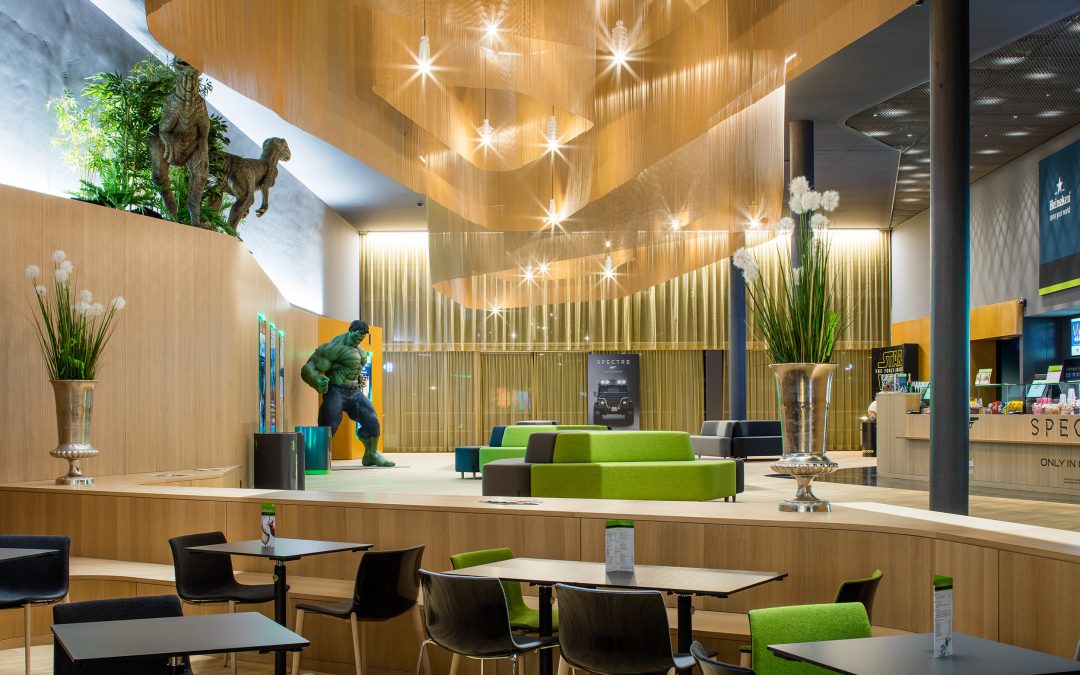
The Multiplex Cinedome by KITAG is located in the Tissot Arena Complex in Biel, Switzerland. The elegant, transparent interior design reflects the new corporate design by KITAG. The synergies of all partners – client, architect, interior designer, lighting designer and engineers – in the design and construction process provided the outstanding new location.

The Cinedome in Biel is an overall LED project. The light colour is 3000K in all areas. Due to the different materials and colours of the materials the lighting becomes a rhythm by its own. All luminaires can be dimmed and create a different scene setting depending on the time of the day. The scene setting also allows the KITAG to create a special setting for individual client groups. The composition of space by the elegant organic feature elements enhances the space experience.

The Multiplex Cinedome by KITAG is located in the Tissot Arena Complex in Biel, Switzerland. The elegant, transparent interior design reflects the new corporate design by KITAG. The synergies of all partners – client, architect, interior designer, lighting designer and engineers – in the design and construction process provided the outstanding new location.

The Cinedome in Biel is an overall LED project. The light colour is 3000K in all areas. Due to the different materials and colours of the materials the lighting becomes a rhythm by its own. All luminaires can be dimmed and create a different scene setting depending on the time of the day. The scene setting also allows the KITAG to create a special setting for individual client groups. The composition of space by the elegant organic feature elements enhances the space experience.

VILLA REITZENSTEIN

VILLA REITZENSTEIN

VILLA REITZENSTEIN

Stuttgart, Germany
Artificial Lighting

Client: Vermögen und Bau Baden-Württemberg Amt Stuttgart
Architect: Sting Architekten EWL
Completion year: 2015
Images: Wolfram Janzer

The general refurbishment of the Villa Reitzenstein, the seat of the Minister President of Baden-Württemberg, was carried out by architectural practice Sting Architekten. A lighting solution was developed which perpetuates historical elements and meets current and future needs. The general lighting of the house is based on geometrical base profiles in which miniaturized lighting heads are integrated as pivoted and rotatable spotlight heads. In the representative rooms the historical chandeliers were renovated and converted to LEDs. The central luminaire in the staircase picks up the theme of the chandelier in a modern interpretation and creates a link between the two main floors.

FEDERAL MINISTRY OF INTERIOR

FEDERAL MINISTRY OF INTERIOR

FEDERAL MINISTRY OF INTERIOR

Berlin, Germany
Artificial Lighting

Architect: Thomas Müller Ivan Reimann Architekten
Completion year: 2015
Images: Stefan Mueller

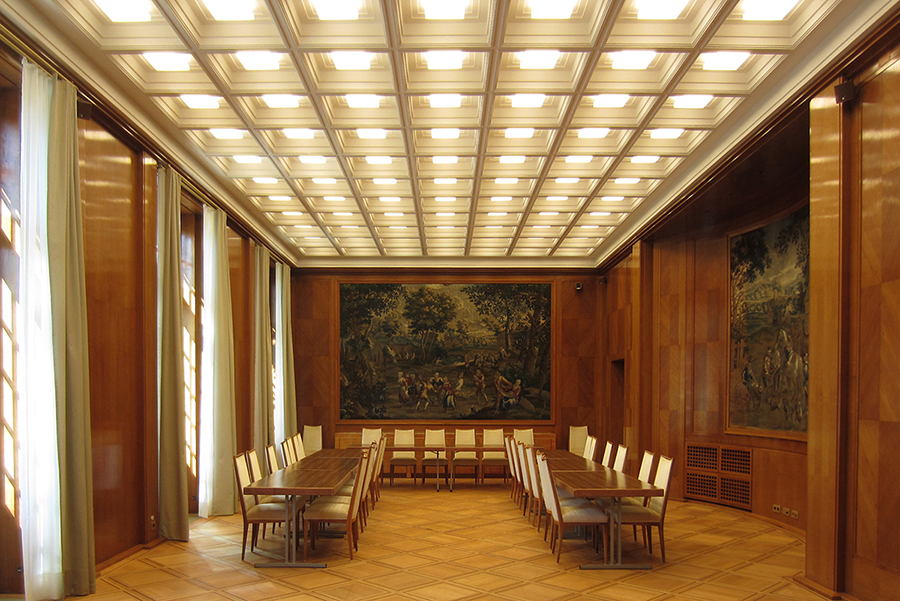
The lighting supports different daylight situations and accentuates the sequence of different rooms. The line is an essential formal element of the lighting concept. A circumferential band of light in the atria increases the spatial impact. A comparable frame of light can be found in the conference rooms. Vertical flush-mounted lightlines illuminate corridors and stairwells.
As a contrast, the lights in the canteen and the cafeteria have been arranged freely. The Ministry is illuminated representatively to the outside by its interior lighting. The lighting of the entrances to the building and of the city square is integrated into the architectural elements.

The lighting supports different daylight situations and accentuates the sequence of different rooms. The line is an essential formal element of the lighting concept. A circumferential band of light in the atria increases the spatial impact. A comparable frame of light can be found in the conference rooms. Vertical flush-mounted light lines illuminate corridors and stairwells.
As a contrast, the lights in the canteen and the cafeteria have been arranged freely. The Ministry is illuminated representatively to the outside by its interior lighting. The lighting of the entrances to the building and of the city square is integrated into the architectural elements.

GRIMM WELT

GRIMM WELT

GRIMM WELT

Kassel, Germany
Artificial Lighting

Architect: kadawittfeldarchitektur
Exhibition Design: Holzer Kobler Architekturen
Completion year: 2015
Images: Jan Bitter and Lichtvision

Located in a scenic park on the hillside of a vineyard close to the city centre of Kassel, the new exhibition building blends gently into the landscape. The building intensifies the characteristic atmosphere of this UNESCO-world heritage site by becoming a walkable sculpture and resonating the topography of the site.
The purpose is to engage the visitors with the exhibition through giving space to intellectual and emotional nuances, reflecting the complexity of the German language and honouring their distinguished fairy tale collection of the Brothers Grimm. The lighting softly enhances the shape of the architecture and immerses the surrounding in a marvellous ambiance, all while echoing its inner structure and gently bringing the invaluable substance of Germany’s heritage to life.
Located in a scenic park on the hillside of a vineyard close to the city centre of Kassel, the new exhibition building blends gently into the landscape. The building intensifies the characteristic atmosphere of this UNESCO-world heritage site by becoming a walkable sculpture and resonating the topography of the site.
The purpose is to engage the visitors with the exhibition through giving space to intellectual and emotional nuances, reflecting the complexity of the German language and honouring their distinguished fairy tale collection of the Brothers Grimm. The lighting softly enhances the shape of the architecture and immerses the surrounding in a marvellous ambiance, all while echoing its inner structure and gently bringing the invaluable substance of Germany’s heritage to life.

GERMAN SCHOOL MADRID

GERMAN SCHOOL MADRID

GERMAN SCHOOL MADRID

Madrid, Spain

Artificial Lighting

Architect: Grüntuch Ernst Architekten
Completion year: 2015
Images: Lichtvision

The German School in Madrid was founded in 1896 and is one of the oldest and largest German schools abroad. It consists of an ensemble of three main buildings which surround a patio: high school, elementary school and kindergarten. A vestibule serves as connection between the cafeteria, auditorium and four-court sports hall. The architecture is characterized by the pentagonal design language, white exposed concrete, glass, aluminum and the omnipresence of light and landscape. Lighting design supports harmoniously the design themes of the architecture and differentiates sensitively and playfully both the buildings for younger and for older pupils. The interaction of daylight and artificial light in the classrooms, corridors and inner courtyards fascinates by its naturalness.

IES Illumination Award International Merit 2017

The German School in Madrid was founded in 1896 and is one of the oldest and largest German schools abroad. It consists of an ensemble of three main buildings which surround a patio: high school, elementary school and kindergarten. A vestibule serves as connection between the cafeteria, auditorium and four-court sports hall. The architecture is characterized by the pentagonal design language, white exposed concrete, glass, aluminum and the omnipresence of light and landscape. Lighting design supports harmoniously the design themes of the architecture and differentiates sensitively and playfully both the buildings for younger and for older pupils. The interaction of daylight and artificial light in the classrooms, corridors and inner courtyards fascinates by its naturalness.

IES Illumination Award International Merit 2017