HALLEN AM BORSIGTURM

HALLEN AM BORSIGTURM

HALLEN AM BORSIGTURM

Berlin, Germany
Artificial Lighting & Daylight

Client: ECE Projektmanagment GmbH & Co KG
Operator, Architect, Co-lighting designer: ECE
Completion year: 2018
Images:
ECE, Lichtvision

Integrated daylight & artificial lighting design in a heritage building.

Built in 1898 as a locomotive production site, the shopping mall “Hallen am Borsigturm” is a 50,000 m² industrial monument that features a dynamic colour experience through all opening hours. The holistic daylight design is based on functional needs and complemented by the use of cool- and warm-white lighting depending on the time of day. In the evenings, mesmerising kinetic lighting of the mall’s roof is now increasingly supported by variable dynamic coloured RGBW spotlights and indirect lighting that highlights the interior structure. High emphasis was put into harmonising daylit and artificially lit areas and reducing the overall contrast levels.

Integrated daylight & artificial lighting design in a heritage building.

Built in 1898 as a locomotive production site, the shopping mall “Hallen am Borsigturm” is a 50,000 m² industrial monument that features a dynamic colour experience through all opening hours. The holistic daylight design is based on functional needs and complemented by the use of cool- and warm-white lighting depending on the time of day. In the evenings, mesmerising kinetic lighting of the mall’s roof is now increasingly supported by variable dynamic coloured RGBW spotlights and indirect lighting that highlights the interior structure. High emphasis was put into harmonising daylit and artificially lit areas and reducing the overall contrast levels.
SELF-PORTRAIT STORE LONDON

SELF-PORTRAIT STORE LONDON

SELF-PORTRAIT STORE LONDON

London, United Kingdom
Artificial Lighting

Architect: Casper Mueller Kneer Architects
Completion year: 2018
Images: Paul Riddle

The new flagship store in London’s Mayfair, designed by Casper Mueller Kneer Architects renowned for their work with arts and fashion clients, unveils a sculptural artistic interior. This is the first stand-alone store for the fashion label Self-Portrait, setting a design precedent for subsequent stores. Spanning 233 m² across the ground and lower ground floors, the store features a sequence of interconnecting spaces that form zones with distinct spatial and material qualities.

Three design elements characterize the interior: custom-designed terrazzo flooring with pink and white marble insets, an open grid ceiling that creates a continuous, luminous horizon, and dark, heavy Cornish mineral clay render covering all wall and ceiling surfaces. The lighting is deliberately minimal, with linear luminaires behind the grid ceiling producing a seamless luminous horizon. Directional spots further accentuate the materials, sculptural design, and products.

This Self-Portrait store not only strengthens its global presence but also establishes a unique stand-alone identity for the first time.

FX Awards 2019: Shortlisted

The new flagship store in London’s Mayfair, designed by Casper Mueller Kneer Architects renowned for their work with arts and fashion clients, unveils a sculptural artistic interior. This is the first stand-alone store for the fashion label Self-Portrait, setting a design precedent for subsequent stores. Spanning 233 m² across the ground and lower ground floors, the store features a sequence of interconnecting spaces that form zones with distinct spatial and material qualities.

Three design elements characterize the interior: custom-designed terrazzo flooring with pink and white marble insets, an open grid ceiling that creates a continuous, luminous horizon, and dark, heavy Cornish mineral clay render covering all wall and ceiling surfaces. The lighting is deliberately minimal, with linear luminaires behind the grid ceiling producing a seamless luminous horizon. Directional spots further accentuate the materials, sculptural design, and products.

This Self-Portrait store not only strengthens its global presence but also establishes a unique stand-alone identity for the first time.

FX Awards 2019: Shortlisted

FRENCH INTERNATIONAL SCHOOL

FRENCH INTERNATIONAL SCHOOL

FRENCH INTERNATIONAL SCHOOL

Tseung Kwan O, Hong Kong
Artificial Lighting & Daylighting Consultancy

Client: The French International School
Architect: Henning Larsen Architects / AGC Design
Images: Philippe Ruault for Henning Larsen Architects
Completion year: 2018

In the concrete jungle of Hong Kong, the new campus of the French International School stands as a vibrant green oasis in the dense city. The lighting design for this school helps create an optimal learning and teaching environment, focusing on visual comfort and functionality to enhance interaction and communication.

Natural daylight is the primary light source, generously yet controllably distributed. This approach reduces contrast and avoids glare from direct sunlight and reflections. The façade design includes 1,050 ceramic sun breakers. These elements gently spread light into the gymnasium, reduce solar heat, and naturally ventilate the interiors. As a result, the need for air conditioning is minimized. Additionally, artificial lighting supports daylight and is seamlessly integrated into the architectural style, reflecting the building’s form and recurring shapes.

At present, more than a thousand pupils enjoy a colorful, collaborative, and multicultural learning space. Furthermore, the innovative lighting design sets a benchmark in the field. It shows how a thoughtful lighting design school project can transform educational spaces into inspiring environments.

In the concrete jungle of Hong Kong, the new campus of the French International School stands as a vibrant green oasis in the dense city. The lighting design for this school helps create an optimal learning and teaching environment, focusing on visual comfort and functionality to enhance interaction and communication.

Natural daylight is the primary light source, generously yet controllably distributed. This approach reduces contrast and avoids glare from direct sunlight and reflections. The façade design includes 1,050 ceramic sun breakers. These elements gently spread light into the gymnasium, reduce solar heat, and naturally ventilate the interiors. As a result, the need for air conditioning is minimized. Additionally, artificial lighting supports daylight and is seamlessly integrated into the architectural style, reflecting the building’s form and recurring shapes.

At present, more than a thousand pupils enjoy a colorful, collaborative, and multicultural learning space. Furthermore, the innovative lighting design sets a benchmark in the field. It shows how a thoughtful lighting design school project can transform educational spaces into inspiring environments.

KITAG CINEDOME MURI

KITAG CINEDOME MURI

KITAG MURI

Muri, Switzerland
Artificial lighting

General contractor: Meierpartner Architekten ETH SIA AG
Interior architect : Holzer Kobler Architekturen
Completion year: 2018
Images:
Radek Brunecky

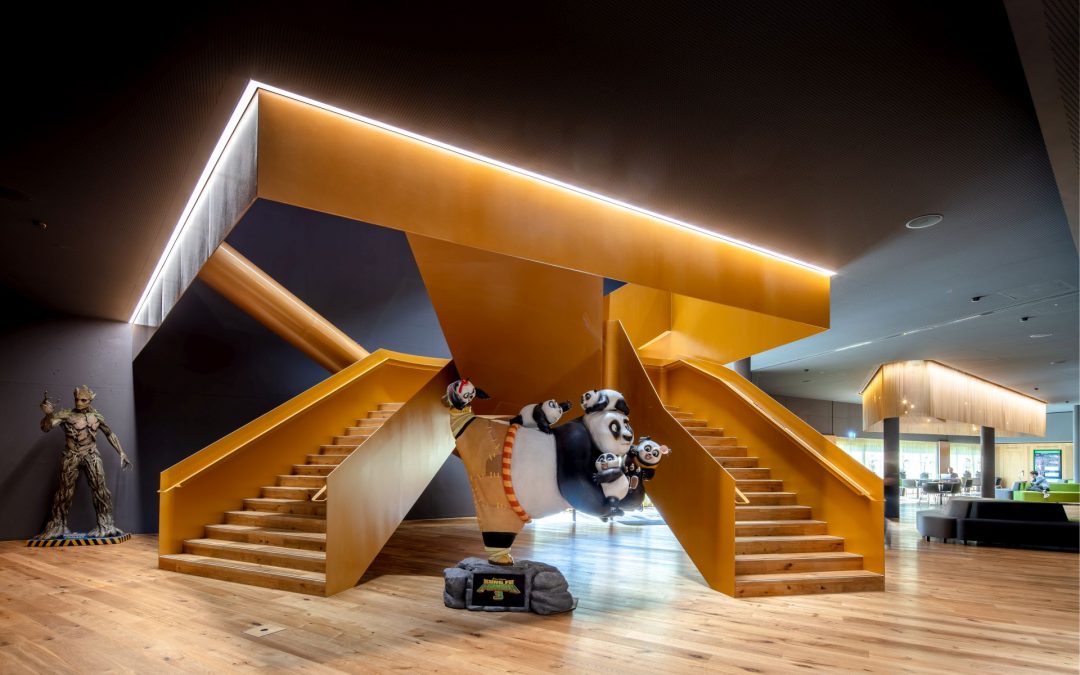
The Multiplex Cinedome Muri by KITAG in Switzerland combines the cinema experience with a sports bar, bowling and VR entertainment. The corporate interior design already established in KITAG Biel with the design team was developed further to embed the new needs of entertainment by KITAG. The synergies of all partners – client, architect, interior designer, lighting designer and engineers – in the design and construction process provided the outstanding new location.

The Cinedome in Muri is an overall LED project. The light colour is 3000K in all areas. Due to the different materials and colours of the materials the lighting becomes a rhythm on its own. All luminaires can be dimmed and create a different scene setting depending on day or nighttime. The scene setting also allows the KITAG to create a special setting for individual client groups. The composition of space by the elegant organic feature elements enhances the space experience.

The Multiplex Cinedome Muri by KITAG in Switzerland combines the cinema experience with a sports bar, bowling and VR entertainment. The corporate interior design already established in KITAG Biel with the design team was developed further to embed the new needs of entertainment by KITAG. The synergies of all partners – client, architect, interior designer, lighting designer and engineers – in the design and construction process provided the outstanding new location.

The Cinedome in Muri is an overall LED project. The light colour is 3000K in all areas. Due to the different materials and colours of the materials the lighting becomes a rhythm on its own. All luminaires can be dimmed and create a different scene setting depending on day or nighttime. The scene setting also allows the KITAG to create a special setting for individual client groups. The composition of space by the elegant organic feature elements enhances the space experience.

WIKINGHOF

WIKINGHOF

WIKINGHOF

Berlin, Germany

Artificial Lighting

Client: Akelius GmbH
Architect: Vuković+Rogulj Architects
Completion year: 2017
Images: Akelius GmbH

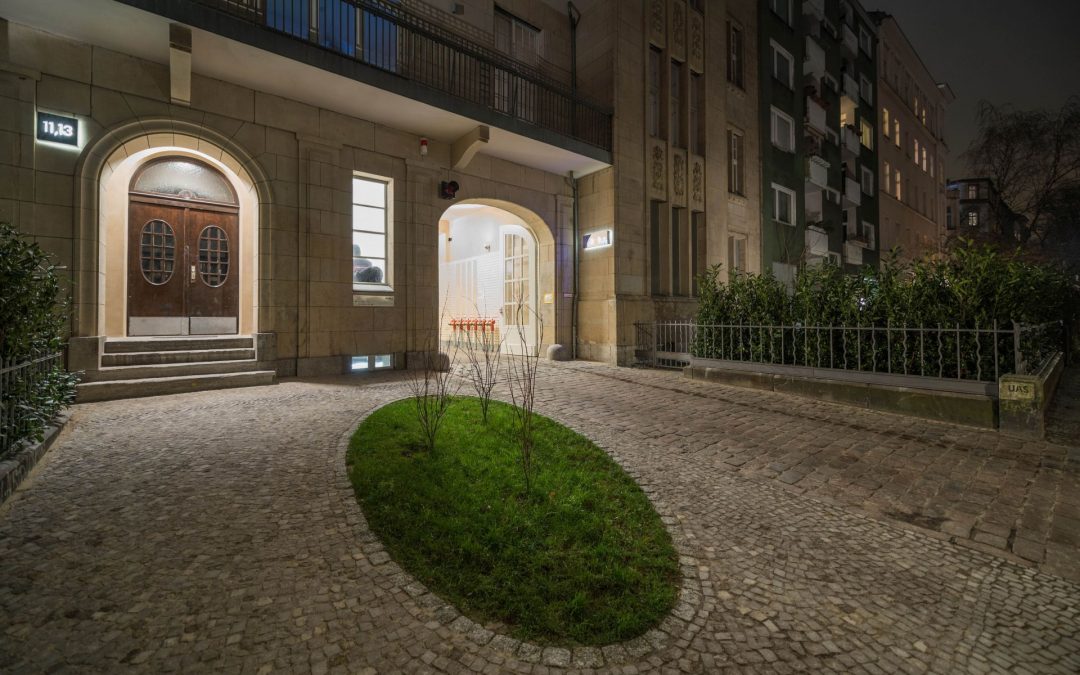
The Wikinghof provides an open working environment which creates a rhythm of office spaces and relaxation areas in an historical context. The listed project was original build in 1899 and was extended 1912. The function was from the beginning a residential building in the front house and production levels in the back facing to the inner courts.

The overall concept for the office areas also includes a restaurant, lounge, meditation room, gym, sauna as well a kindergarten. The lighting design defines with the interior design elements an integrated solution. The open space were provided with a linear staggered lighting layout. The more private areas as telephone booth and meeting areas were designed with decorative suspended luminaires. The circulation areas are supplied with large scale backlit light boxes with artistic prints. The theme of the light boxes guide the visitors through the complex. The different single functions have their own lighting identity by lighting pools only following the general idea to minimize glare points and integrate the fittings into the interior design. The strong collaboration between Vuković+Rogulj and Lichtvision Design in the design phase allowed the interior designers to continue and adjust the final layout in construction phase into a beautiful scheme.

The Wikinghof provides an open working environment which creates a rhythm of office spaces and relaxation areas in an historical context. The listed project was original build in 1899 and was extended 1912. The function was from the beginning a residential building in the front house and production levels in the back facing to the inner courts.

The overall concept for the office areas also includes a restaurant, lounge, meditation room, gym, sauna as well a kindergarten. The lighting design defines with the interior design elements an integrated solution. The open space were provided with a linear staggered lighting layout. The more private areas as telephone booth and meeting areas were designed with decorative suspended luminaires. The circulation areas are supplied with large scale backlit light boxes with artistic prints. The theme of the light boxes guide the visitors through the complex. The different single functions have their own lighting identity by lighting pools only following the general idea to minimize glare points and integrate the fittings into the interior design. The strong collaboration between Vuković+Rogulj and Lichtvision Design in the design phase allowed the interior designers to continue and adjust the final layout in construction phase into a beautiful scheme.