BAKU CRYSTAL HALL

BAKU CRYSTAL HALL

BAKU CRYSTAL HALL

Baku, Azerbaijan

Artificial Lighting and Lighting Controls

Architect: gmp Architeckten, Alpine Bau
Completion year: 2012
Images: Florian Licht

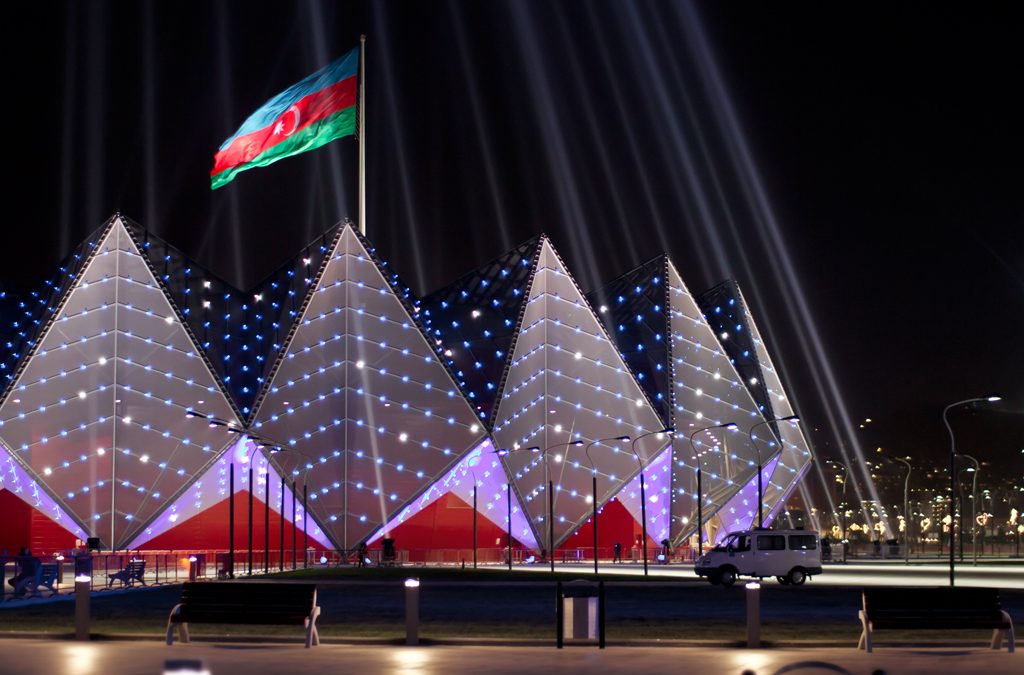
Just in time for the Eurovision Song Contest 2012, the Baku Crystal Hall – a modern, multi-functional event arena with a capacity of 23,000 spectators – could be completed in a record time of only eight months. The 206-metre-long and 168-metre-wide steel construction is clad with an illuminated membrane facade, which lends the building its characteristic crystalline appearance. During the dark hours the majestic hall’s facade is lit by 5,400 LED RGB light points that make a great visual impact.

IES Award of Merit 2013

LAMP Award 2013, shortlisted

illumni infinity award 2013 ‘Bronze’

Just in time for the Eurovision Song Contest 2012, the Baku Crystal Hall – a modern, multi-functional event arena with a capacity of 23,000 spectators – could be completed in a record time of only eight months. The 206-metre-long and 168-metre-wide steel construction is clad with an illuminated membrane facade, which lends the building its characteristic crystalline appearance. During the dark hours the majestic hall’s facade is lit by 5,400 LED RGB light points that make a great visual impact.

IES Award of Merit 2013

LAMP Award 2013, shortlisted

illumni infinity award 2013 ‘Bronze’

GUTSHOF BRITZ

GUTSHOF BRITZ

GUTSHOF BRITZ

Berlin, Germany
Artificial Lighting

Architect: Abelmann Vielain Pock Architekten BDA
Completion year: 2011
Images: Lichtvision

Throughout the modernization of the Britz manor, a new attractive cultural centre was created in the heart of the Berlin district of Neukölln. The new lighting design concept is characterised by a combined use of two different types of facade illumination: flat, crossable ground recessed lights slightly brighten up the building envelope, while accent lighting of single, well-chosen elements by miniaturized LED lights provides an interesting and attractive appearance during nighttime.

GERMANISCHES NATIONALMUSEUM

GERMANISCHES NATIONALMUSEUM

GERMANISCHES NATIONALMUSEUM

Nuremberg, Germany
Artificial Lighting, Daylight & Lighting Control

Architect: Staatliches Bauamt Erlangen-Nürnberg
Completion year: 2010
Images: Lichtvision, Lothar Reichel Revo Studio

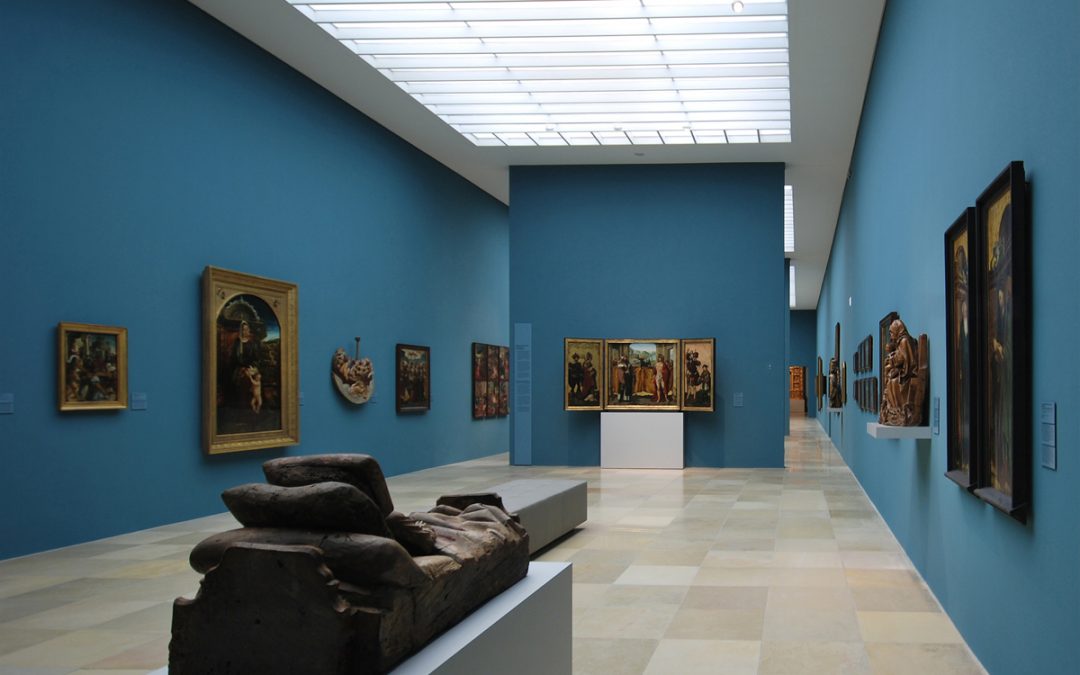
The gallery building of the Germanisches Nationalmuseum, dating from the 1920s, has been extensively renovated according to the plans of the State Building Authority. The renovation included a comprehensive refurbishment of the roof and the glazing of the ceiling skylights above the first floor, allowing the halls of the gallery building to be illuminated primarily by natural daylight again. The upper light halls now house a diverse collection of paintings, sculptures, and art objects, presented in a continuous sequence of rooms. This renovation carefully considered both conservation and perceptual physiological aspects to enhance the visitor experience.

The gallery building of the Germanisches Nationalmuseum, dating from the 1920s, has been extensively renovated according to the plans of the State Building Authority. The renovation included a comprehensive refurbishment of the roof and the glazing of the ceiling skylights above the first floor, allowing the halls of the gallery building to be illuminated primarily by natural daylight again. The upper light halls now house a diverse collection of paintings, sculptures, and art objects, presented in a continuous sequence of rooms. This renovation carefully considered both conservation and perceptual physiological aspects to enhance the visitor experience.

ALBERTINUM

ALBERTINUM

ALBERTINUM

Dresden, Germany
Artificial Lighting and Consulting Daylight

Architect: Staab Architekten
Completion year: 2010
Images: David Brandt

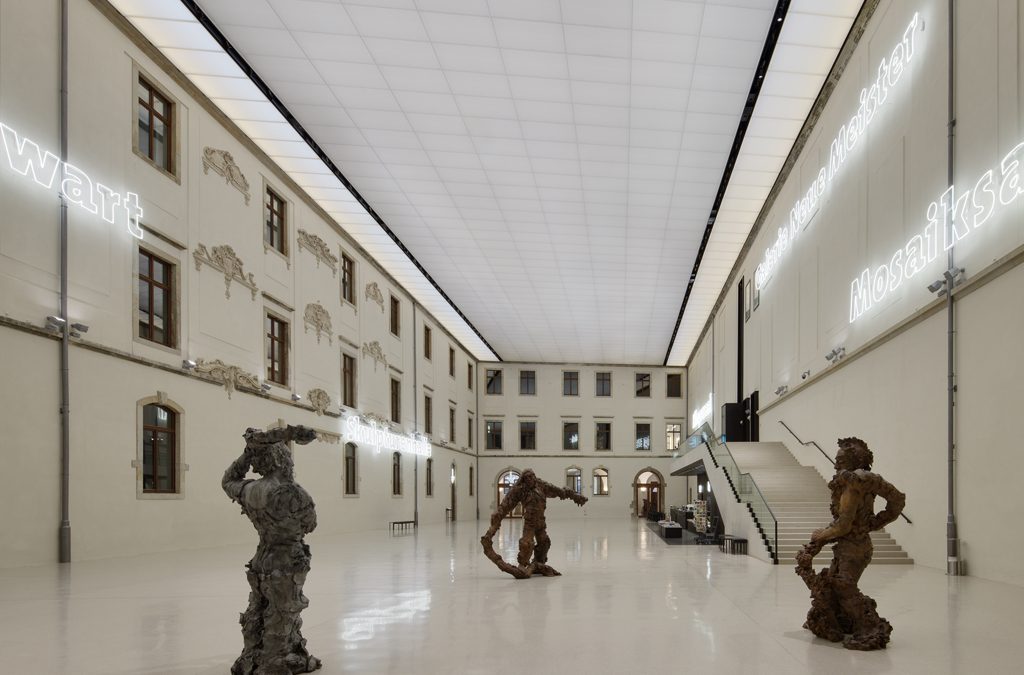
The new Albertinum includes a redesign of the existing building structure and a re-organisation by adding the necessary art depots not inside the inner courtyard, but above. A generous space was created that is now used as a foyer and event space while providing a connecting link for the diverse exhibitions. The exhibition areas display both classic and modern sculptures as well as paintings. The atmosphere ranges from mainly daylit spaces through classic galleries to almost dark depots. Lighting supports these atmospheres and exhibition requirements, paying attention to integrate into the design without standing out on its own.

OPERNTURM FRANKFURT

OPERNTURM FRANKFURT

OPERNTURM FRANKFURT

Frankfurt/Main, Germany
Artificial Lighting and Consulting Daylight

Architect: Prof. Christoph Mäckler
Completion year: 2010
Images:
Eicken und Mack

The Opernturm in Frankfurt am Main stands at approximately 170 meters and is a key feature of the city’s skyline. The building is divided into four slender towers by vertical notches, connected by a bridge at the top. A lower perimeter block anchors the complex, with distinct entrances enhancing its urban presence.

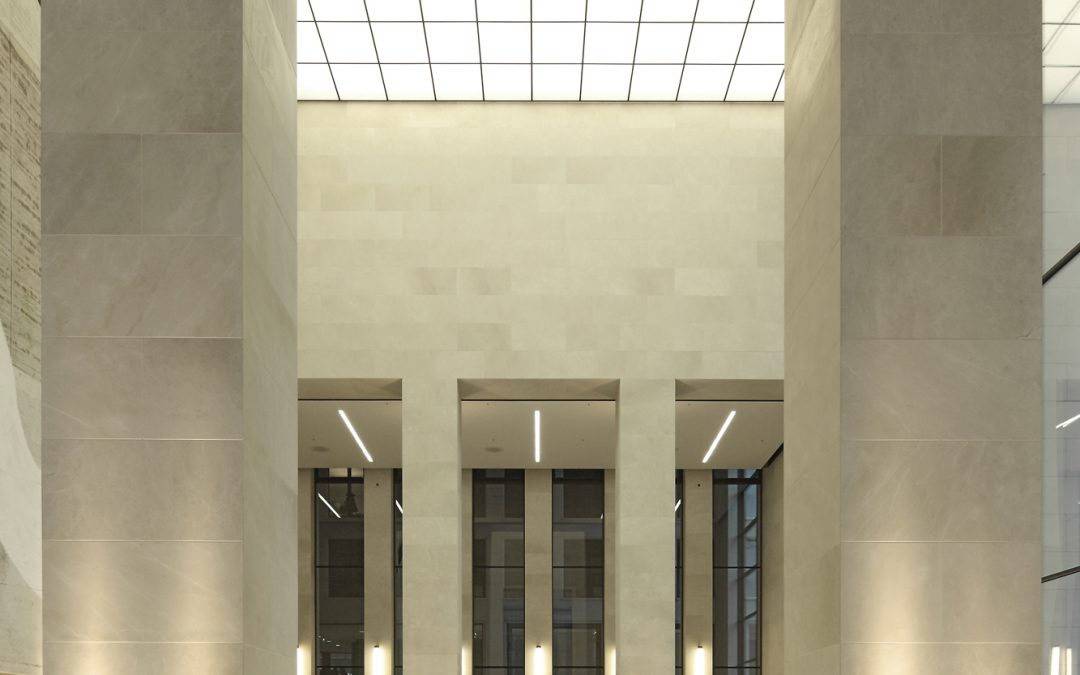
The prestigious main entrance features a reception hall with a large illuminated ceiling, perfect for displaying art objects. The open plaza at the core of the complex harmonizes art and daylight. Illuminating the ensemble in the Frankfurt skyline at night was a challenge, but the block facing Opernplatz respects the historical context while creating a striking distant view.

The Opernturm in Frankfurt am Main stands at approximately 170 meters and is a key feature of the city’s skyline. The building is divided into four slender towers by vertical notches, connected by a bridge at the top. A lower perimeter block anchors the complex, with distinct entrances enhancing its urban presence.

The prestigious main entrance features a reception hall with a large illuminated ceiling, perfect for displaying art objects. The open plaza at the core of the complex harmonizes art and daylight. Illuminating the ensemble in the Frankfurt skyline at night was a challenge, but the block facing Opernplatz respects the historical context while creating a striking distant view.