FLICK COLLECTION HAMBURGER BAHNHOF

FLICK COLLECTION HAMBURGER BAHNHOF

FLICK COLLECTION HAMBURGER BAHNHOF

Berlin, Germany
Artificial Lighting & Lighting Controls

Architect: Kühn Malvezzi Architects
Completion year: 2004
Images: Ulrich Schwarz

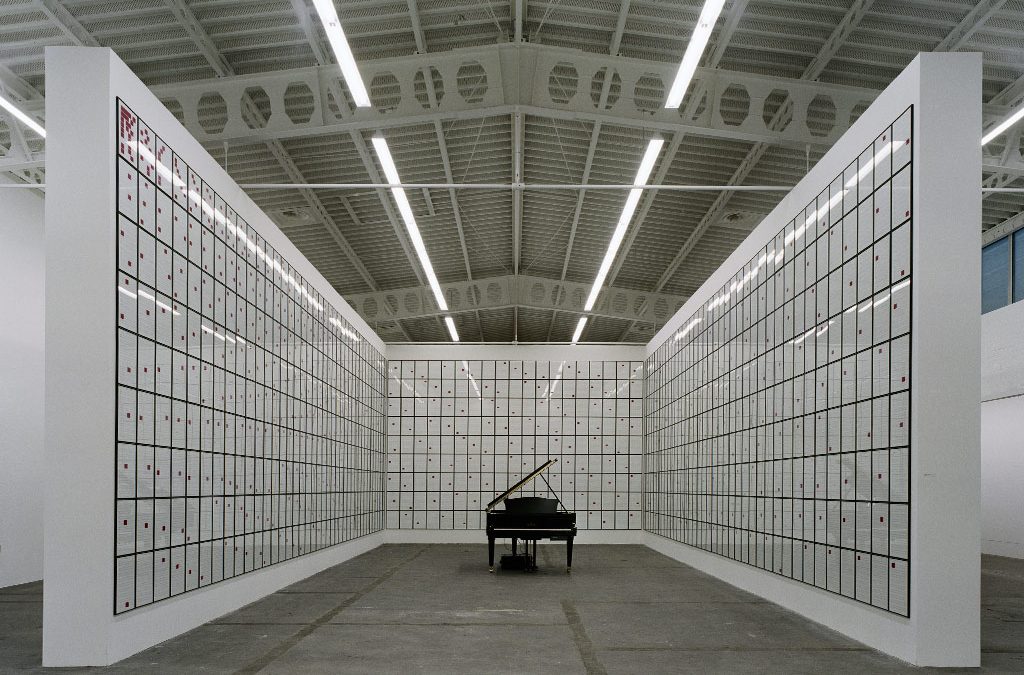
In the newly renovated extension of the Hamburger Bahnhof, the Rieckhallen, the collection of contemporary art by Friedrich-Christian Flick is shown on approx. 6,000 m² of exhibition space. The biannual change of exhibits, consisting of paintings, sculptures and media installations, requires a lighting system that can react flexibly to changing exhibition situations. The design is based on the principle of design invisibility – implemented with only one type of luminaire and interchangeable reflectors as well as a DALI lighting control system.

SCHWABENGALERIE

SCHWABENGALERIE

SCHWABENGALERIE

Stuttgart, Germany

Artificial Lighting

Architect: Léon Wohlhage Wernik Architekten
Completion year: 2003
Images: Christian Richters

The Schwabengalerie has a plot size of over 25,000 m2. The building complex consists of additive cubatures with different functions. Central spot is the citizens’ forum with its gallery-like circulation area. Of importance for the area is the connection between different functional areas, the conveying of security and convenience, especially in the evening hours, as well as the aspect of the effect on possible customers from a distance.

Licht Architektur Preis 2005, Recognition

The Schwabengalerie has a plot size of over 25,000 m2. The building complex consists of additive cubatures with different functions. Central spot is the citizens’ forum with its gallery-like circulation area. Of importance for the area is the connection between different functional areas, the conveying of security and convenience, especially in the evening hours, as well as the aspect of the effect on possible customers from a distance.

Licht Architektur Preis 2005, Recognition

UNIVERSAL MUSIC HEADQUARTER

UNIVERSAL MUSIC HEADQUARTER

UNIVERSAL MUSIC HEADQUARTER

Berlin, Germany
Artificial Lighting & Lighting Controls

Architect: Aukett + Heese
Completion year: 2002
Images: Michael Haddenhorst

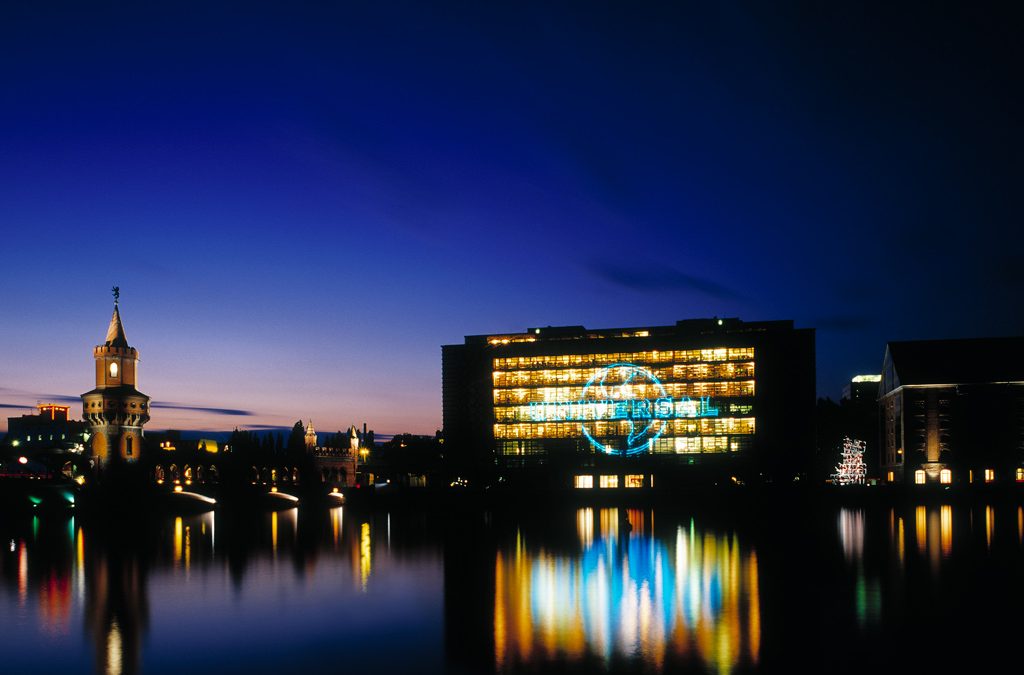
With the relocation to the historic Spreespeicher, it was decided to prominently display the logo on the facade for maximum visual impact. To minimize the obstruction of the glass facade during the day, an innovative installation was implemented using light guides integrated into stainless steel structures.

A color wheel in the light projectors and the multiple reflections on the glass, varying with the viewer’s perspective, create a continuously evolving image.

With the relocation to the historic Spreespeicher, it was decided to prominently display the logo on the facade for maximum visual impact. To minimize the obstruction of the glass facade during the day, an innovative installation was implemented using light guides integrated into stainless steel structures.

A color wheel in the light projectors and the multiple reflections on the glass, varying with the viewer’s perspective, create a continuously evolving image.

LEIBNIZ COLONNADE

LEIBNIZ COLONNADE

LEIBNIZ COLONNADE

Berlin, Germany
Artificial lighting

Architect: Kollhoff Architekten
Completion year: 2001
Images: Ivan Nemec

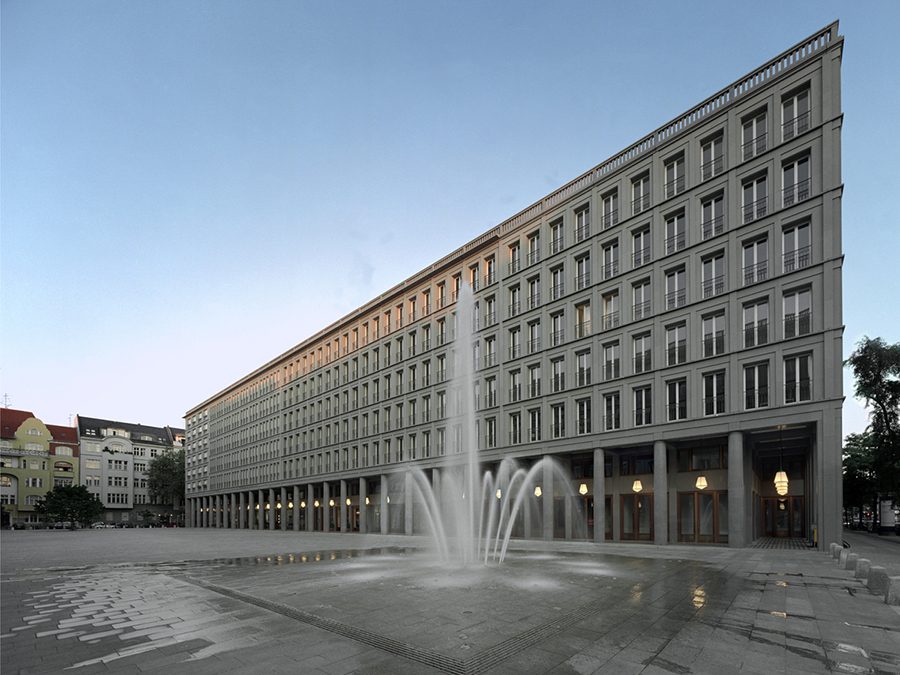
The newly developed Walter-Benjamin-Platz in Berlin-Charlottenburg is composed by a sequence of suspended luminaires in the colonnades and is defined by the illumination of fountain and planting at night. The luminaire is the realisation of the idea of a crystalline glass body in a decoration setting. Proportions and mounting height were designed considering light omissions for the rental units nearby. The induction lamp makes long maintenance cycles for the operator possible.

The newly developed Walter-Benjamin-Platz in Berlin-Charlottenburg is composed by a sequence of suspended luminaires in the colonnades and is defined by the illumination of fountain and planting at night. The luminaire is the realisation of the idea of a crystalline glass body in a decoration setting. Proportions and mounting height were designed considering light omissions for the rental units nearby. The induction lamp makes long maintenance cycles for the operator possible.