BAUHAUS MUSEUM DESSAU

BAUHAUS MUSEUM DESSAU

BAUHAUS MUSEUM DESSAU

Dessau, Germany
Artificial Lighting

Client: Stiftung Bauhaus Dessau

Architect: addenda architects
Completion year: 2019

Images: Zumtobel, Faruk Pinjo


The lighting design creates a serial, industrial, flexible linear basic structure in the area of the ceiling with a classic lighting strip system, which allows for intake of a wide variety of lighting components as well as electrical components. The minimization of the stylistic devices of lighting technology puts emphasis on the space and forms the stage for the manifold use of the newly created Bauhaus space. The general light works with the democratic-diffused light. The exhibition design in the collection area works in the staged light-directed light.

The ground floor with the temporary exhibition aims at opening up technically and spatially. The staging of art gives the viewer space to classify the object in a local context. The visual relationship with the city and the park is integrated into the presentation. The Bauhaus is not just building and art history but is calibrated in the now.

The lighting design creates a serial, industrial, flexible linear basic structure in the area of the ceiling with a classic lighting strip system, which allows for intake of a wide variety of lighting components as well as electrical components. The minimization of the stylistic devices of lighting technology puts emphasis on the space and forms the stage for the manifold use of the newly created Bauhaus space. The general light works with the democratic-diffused light. The exhibition design in the collection area works in the staged light-directed light.

The ground floor with the temporary exhibition aims at opening up technically and spatially. The staging of art gives the viewer space to classify the object in a local context. The visual relationship with the city and the park is integrated into the presentation. The Bauhaus is not just building and art history but is calibrated in the now.

ANTONIOLI STORE

ANTONIOLI STORE

ANTONIOLI STORE

Milan, Italy
Artifical lighting

Architect: Casper Mueller Kneer
Completion year: 2019
Images: Simone Bossi

Artificial interior lighting design was provided for a new boutique of the fashion luxury brand Antonioli. The lighting approach provides a regular grid of surface mounted linear lighting combined with surface spotlights as accents for product presentation. The clean, minimalistic and graphical ceiling design blends with the elegant and honest interior architecture and is visually multiplied in the reflective surfaces. The lighting at 3000K provides a neutral yet welcoming atmosphere, while a high CRI allows for merchandise colours to stand out giving eye catching accents.

Artificial interior lighting design was provided for a new boutique of the fashion luxury brand Antonioli. The lighting approach provides a regular grid of surface mounted linear lighting combined with surface spotlights as accents for product presentation. The clean, minimalistic and graphical ceiling design blends with the elegant and honest interior architecture and is visually multiplied in the reflective surfaces. The lighting at 3000K provides a neutral yet welcoming atmosphere, while a high CRI allows for merchandise colours to stand out giving eye catching accents.

SUZHOU NO. 2 LIBRARY

SUZHOU NO. 2 LIBRARY

SUZHOU NO. 2 LIBRARY

Suzhou, China
Artificial Lighting

Client: Library Suzhou
Architect: gmp Architekten
Completion year: 2019
Images: Christian Gahl, gmp Architekten

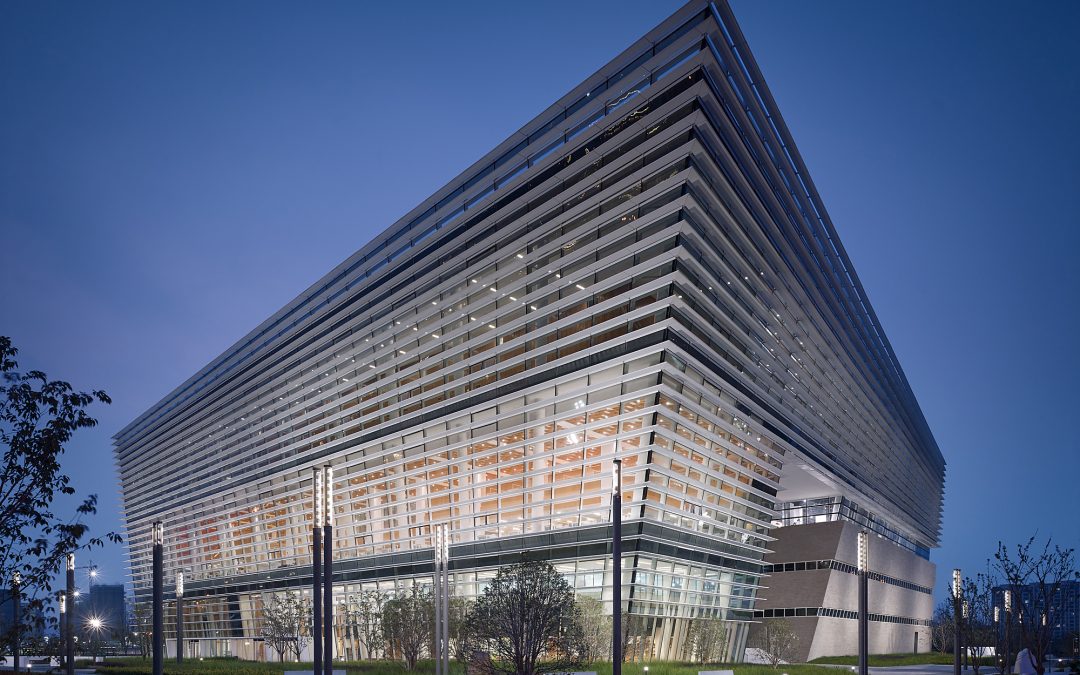
The library derives its unique appearance from the buildings shape and materiality of its façade. Aluminium louvers provide a generous transparency whilst the elegant solid volumes give weight. Pole mounted flood lights with precise lighting optics cast a subtle and even wash to the facade louvres. Optics and angles were chosen to keep glare towards people within the building to a minimum while maximising the lighting effect on the louvers. Ceilings of the large access corridors leading to the central courtyard are evenly accentuated to provide a sense of orientation and generosity. The bright ceilings open the space up visually and provide the adequate light for wayfinding and comfort.

The library derives its unique appearance from the buildings shape and materiality of its façade. Aluminium louvers provide a generous transparency whilst the elegant solid volumes give weight. Pole mounted flood lights with precise lighting optics cast a subtle and even wash to the facade louvres. Optics and angles were chosen to keep glare towards people within the building to a minimum while maximising the lighting effect on the louvers. Ceilings of the large access corridors leading to the central courtyard are evenly accentuated to provide a sense of orientation and generosity. The bright ceilings open the space up visually and provide the adequate light for wayfinding and comfort.

AIDANOVA

AIDANOVA

AIDANOVA

Cruiseship
Artificial Lighting

Architect: Partner Ship Design
Completion year: 2018
Images: Ingrid Fiebak

The lighting design for the AIDAnova cruise ship is a prime example of innovative cruise ship lighting design, emphasizing sustainability, energy efficiency, and enhancing the passenger experience. As the first liquefied natural gas (LNG)-powered cruise ship, AIDAnova features lighting that not only conserves energy but also complements the ship’s architecture, creating the perfect ambiance in various areas. Each space, whether it’s the restaurants, bars, or wellness areas, benefits from carefully designed lighting that balances functionality and atmosphere. This approach highlights key architectural features, ensuring both safety and aesthetic appeal, setting a new benchmark for cruise ship lighting.

The ship is home to 17 restaurants, 18 bars and clubs, 6 pools, a 3,500 m² wellness area, and a 1,000 m² shopping center.

The lighting design for the AIDAnova cruise ship is a prime example of innovative cruise ship lighting design, emphasizing sustainability, energy efficiency, and enhancing the passenger experience. As the first liquefied natural gas (LNG)-powered cruise ship, AIDAnova features lighting that not only conserves energy but also complements the ship’s architecture, creating the perfect ambiance in various areas. Each space, whether it’s the restaurants, bars, or wellness areas, benefits from carefully designed lighting that balances functionality and atmosphere. This approach highlights key architectural features, ensuring both safety and aesthetic appeal, setting a new benchmark for cruise ship lighting.

The ship is home to 17 restaurants, 18 bars and clubs, 6 pools, a 3,500 m² wellness area, and a 1,000 m² shopping center.

WUYUANHE STADIUM

WUYUANHE STADIUM

WUYUANHE STADIUM

Haikou, China

Exterior Lighting

Architect: gmp Architekten
Completion year: 2018
Photos: Schran Images

The new Wuyuanhe Stadium is situated at the southern island of Hainan, China. The building provides seats for more than 41,000 visitors and was developed on an extremely fast project schedule with a construction time of 15 month only. The iconic building was designed to blend into the surrounding architectural, cultural and costal landscape of Hainan. The architectural lighting provides a key role of the building’s success, enhancing visually the flowy and dynamic as well as the solid structures. Light contributes to subconscious wayfinding tasks for spectators and allows communication with the city via a low-resolution media component.

The new Wuyuanhe Stadium is situated at the southern island of Hainan, China. The building provides seats for more than 41,000 visitors and was developed on an extremely fast project schedule with a construction time of 15 month only. The iconic building was designed to blend into the surrounding architectural, cultural and costal landscape of Hainan. The architectural lighting provides a key role of the building’s success, enhancing visually the flowy and dynamic as well as the solid structures. Light contributes to subconscious wayfinding tasks for spectators and allows communication with the city via a low-resolution media component.