KITAG CINEDOME MURI

KITAG CINEDOME MURI

KITAG MURI

Muri, Switzerland
Artificial lighting

General contractor: Meierpartner Architekten ETH SIA AG
Interior architect : Holzer Kobler Architekturen
Completion year: 2018
Images:
Radek Brunecky

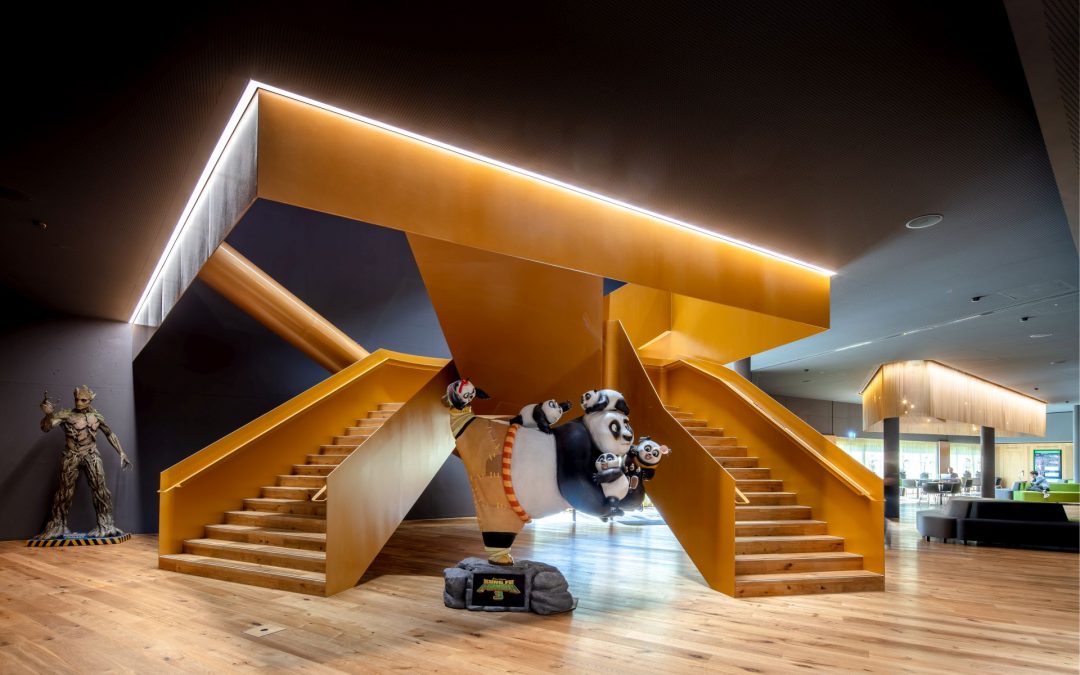
The Multiplex Cinedome Muri by KITAG in Switzerland combines the cinema experience with a sports bar, bowling and VR entertainment. The corporate interior design already established in KITAG Biel with the design team was developed further to embed the new needs of entertainment by KITAG. The synergies of all partners – client, architect, interior designer, lighting designer and engineers – in the design and construction process provided the outstanding new location.

The Cinedome in Muri is an overall LED project. The light colour is 3000K in all areas. Due to the different materials and colours of the materials the lighting becomes a rhythm on its own. All luminaires can be dimmed and create a different scene setting depending on day or nighttime. The scene setting also allows the KITAG to create a special setting for individual client groups. The composition of space by the elegant organic feature elements enhances the space experience.

The Multiplex Cinedome Muri by KITAG in Switzerland combines the cinema experience with a sports bar, bowling and VR entertainment. The corporate interior design already established in KITAG Biel with the design team was developed further to embed the new needs of entertainment by KITAG. The synergies of all partners – client, architect, interior designer, lighting designer and engineers – in the design and construction process provided the outstanding new location.

The Cinedome in Muri is an overall LED project. The light colour is 3000K in all areas. Due to the different materials and colours of the materials the lighting becomes a rhythm on its own. All luminaires can be dimmed and create a different scene setting depending on day or nighttime. The scene setting also allows the KITAG to create a special setting for individual client groups. The composition of space by the elegant organic feature elements enhances the space experience.

AUDI CANTEEN

AUDI CANTEEN

AUDI CANTEEN

Ingolstadt, Germany

Artificial Lighting

Interior Designer: Landau + Kindelbacher Architekten – Innenarchitekten
Completion year: 2016
Images: Christian Hacker

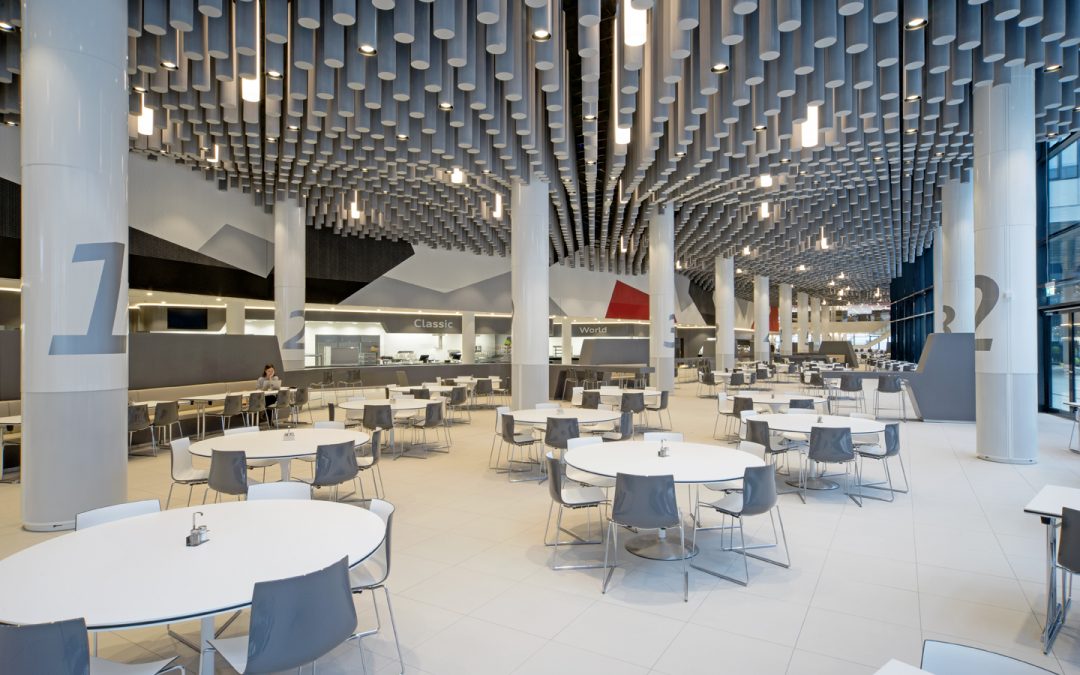
The AUDI Canteen presents itself as a large open space and functions as canteen, bistro, lounge, work place and meeting point. The lighting is carefully integrated into its main design feature of three- dimensionally suspended acoustic cylinders. Large diffuse objects and downlights integrated into the cylinders enhance the dynamics of the ceiling, allow an interplay of light and shadow and support the various functions underneath.

WIKINGHOF

WIKINGHOF

WIKINGHOF

Berlin, Germany

Artificial Lighting

Client: Akelius GmbH
Architect: Vuković+Rogulj Architects
Completion year: 2017
Images: Akelius GmbH

The Wikinghof provides an open working environment which creates a rhythm of office spaces and relaxation areas in an historical context. The listed project was original build in 1899 and was extended 1912. The function was from the beginning a residential building in the front house and production levels in the back facing to the inner courts.

The overall concept for the office areas also includes a restaurant, lounge, meditation room, gym, sauna as well a kindergarten. The lighting design defines with the interior design elements an integrated solution. The open space were provided with a linear staggered lighting layout. The more private areas as telephone booth and meeting areas were designed with decorative suspended luminaires. The circulation areas are supplied with large scale backlit light boxes with artistic prints. The theme of the light boxes guide the visitors through the complex. The different single functions have their own lighting identity by lighting pools only following the general idea to minimize glare points and integrate the fittings into the interior design. The strong collaboration between Vuković+Rogulj and Lichtvision Design in the design phase allowed the interior designers to continue and adjust the final layout in construction phase into a beautiful scheme.

The Wikinghof provides an open working environment which creates a rhythm of office spaces and relaxation areas in an historical context. The listed project was original build in 1899 and was extended 1912. The function was from the beginning a residential building in the front house and production levels in the back facing to the inner courts.

The overall concept for the office areas also includes a restaurant, lounge, meditation room, gym, sauna as well a kindergarten. The lighting design defines with the interior design elements an integrated solution. The open space were provided with a linear staggered lighting layout. The more private areas as telephone booth and meeting areas were designed with decorative suspended luminaires. The circulation areas are supplied with large scale backlit light boxes with artistic prints. The theme of the light boxes guide the visitors through the complex. The different single functions have their own lighting identity by lighting pools only following the general idea to minimize glare points and integrate the fittings into the interior design. The strong collaboration between Vuković+Rogulj and Lichtvision Design in the design phase allowed the interior designers to continue and adjust the final layout in construction phase into a beautiful scheme.

AUDREY HOUSE LONDON

AUDREY HOUSE LONDON

AUDREY HOUSE LONDON

London, United Kingdom

Exterior Lighting

Client: Axiom Solutions Ltd.
Images: Sophie Mutevelian
2017

Audrey House is a prominent office building on Ely Place in an attractive, historic, gated cul-de-sac near Hatton Garden in London. The identity of the building is based on its own heritage design language as well its neighbourhood.

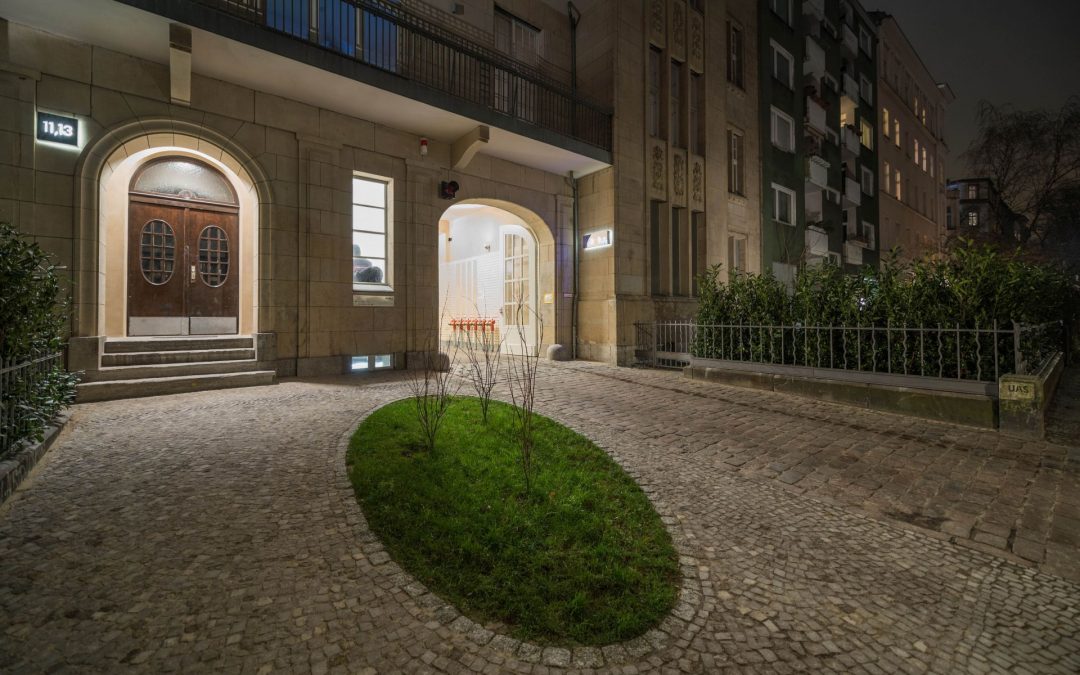
The façade lighting strategy creates a subtle and sophisticated solution respecting the detailed historical façade. The overall composition enhances the decorative elements, friezes, cornices, pilasters and allows a distinguished night view.

The size and location of the luminaires was carefully selected to minimise the visual impact during daytime. A central London typical lower GF lightwell was used to conceal luminaires for the ground floor lighting while controlling potential glare for tenants. With less than one kilowatt installed power, this is a low energy and low budget façade installation that transforms the ornate period façade at night. The design of the installation considers the indoor of the building and does not impact on the office spaces within.

Site photographs and onsite mock-ups were crucial for the successful design development of the project. The result being a prominent transformation of this historic building at night.


IES Award of Merit

NEUE WACHE

NEUE WACHE

NEUE WACHE

Berlin, Germany
Artificial Lighting

Architect: Karl Friedrich Schinkel
Completion year: 2017
Image: Ansgar Koreng CC

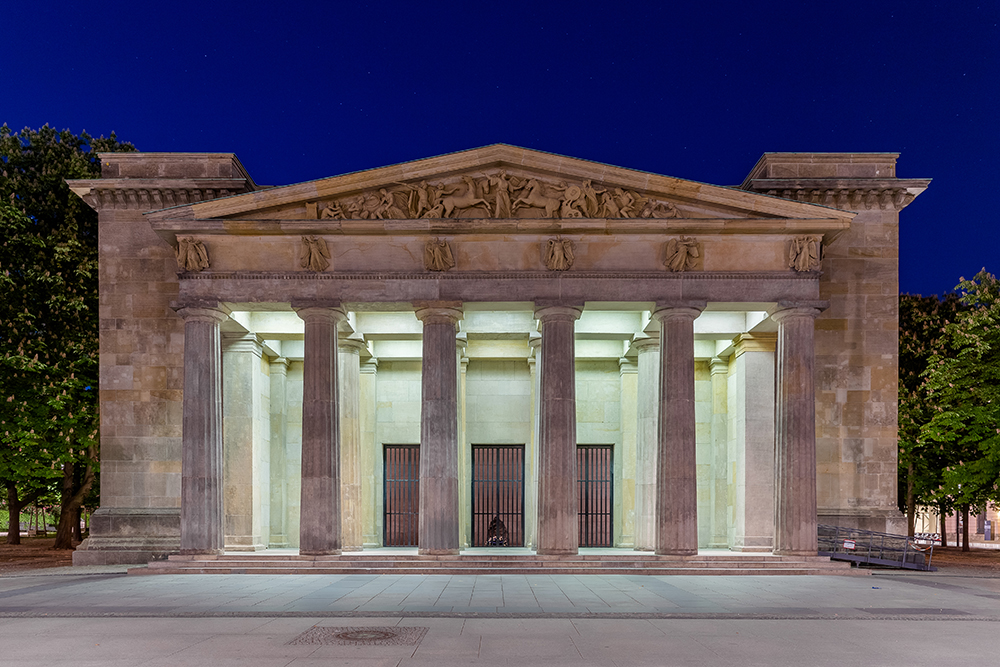
The Neue Wache (English: New Guardhouse) is a listed building on Unter den Linden boulevard in the historic centre of Berlin. Erected between 1816 and 1818 according to plans by Karl Friedrich Schinkel as a guardhouse for the Royal Palace and a memorial to the Liberation Wars, it is considered as a major work of Prussian Neoclassical architecture.

After German reunification, the Neue Wache was again rededicated in 1993, as the „Central Memorial of the Federal Republic of Germany for the Victims of War and Dictatorship.“ At the personal suggestion of Chancellor Helmut Kohl, the GDR memorial piece was removed and replaced by an enlarged version of Käthe Kollwitz‘s sculpture Mother with her Dead Son.

The Neue Wache (English: New Guardhouse) is a listed building on Unter den Linden boulevard in the historic centre of Berlin. Erected between 1816 and 1818 according to plans by Karl Friedrich Schinkel as a guardhouse for the Royal Palace and a memorial to the Liberation Wars, it is considered as a major work of Prussian Neoclassical architecture.

After German reunification, the Neue Wache was again rededicated in 1993, as the „Central Memorial of the Federal Republic of Germany for the Victims of War and Dictatorship.“ At the personal suggestion of Chancellor Helmut Kohl, the GDR memorial piece was removed and replaced by an enlarged version of Käthe Kollwitz‘s sculpture Mother with her Dead Son.