LIGHT INSTALLATION BLEIBTREUSTRASSE

LIGHT INSTALLATION BLEIBTREUSTRASSE

LIGHT INSTALLATION BLEIBTREUSTRASSE

Berlin, Germany
Consulting Artificial Lighting

Architect: Andreas Kuhnert / aletja+ GmbH
Completion year: 2013
Images: Gordon Wehowsky

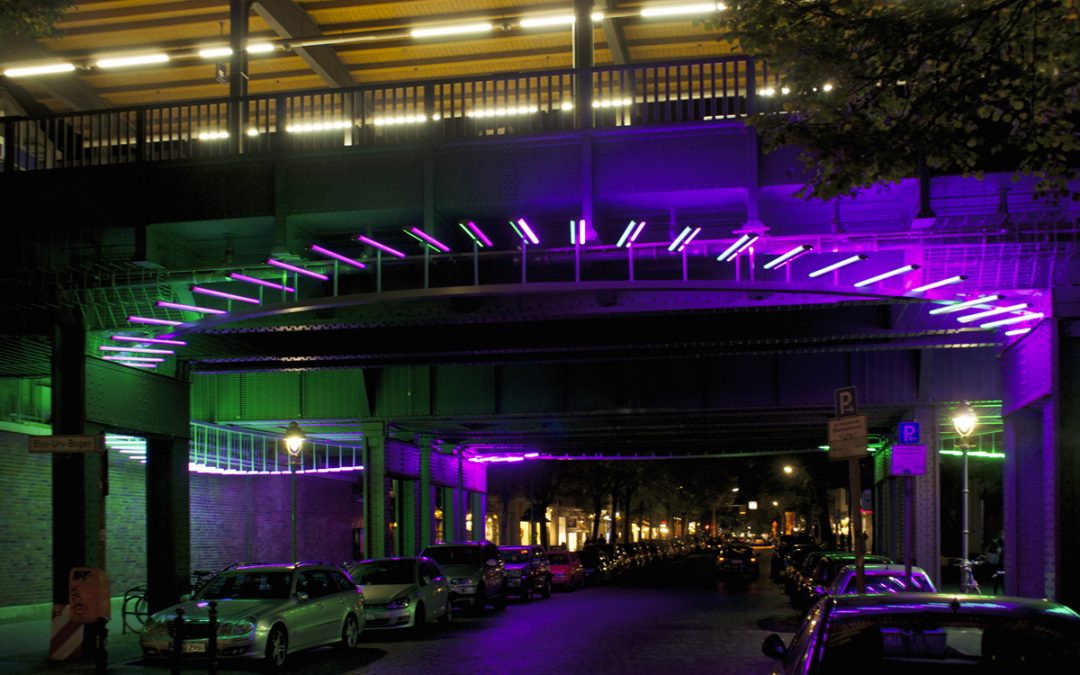
The idea was to create a “pearl chain of light” by eight bridges in the City West of Berlin. One of these bridges crosses the Bleibtreustrasse. The lighting in the shape of a circle dynamically clings to the bridge construction and visually enhances the space under the bridge.
The installation reacts to pedestrians and traffic, creating a playful interactivity with lighting which becomes perceptible in the form of colour and rhythm changes. Interactivity with pedestrians is the core idea of the project. It is controlled by four motion sensors which are installed above the sidewalk in the “entrance areas” and trigger the corresponding light sequences.

The idea was to create a “pearl chain of light” by eight bridges in the City West of Berlin. One of these bridges crosses the Bleibtreustrasse. The lighting in the shape of a circle dynamically clings to the bridge construction and visually enhances the space under the bridge.
The installation reacts to pedestrians and traffic, creating a playful interactivity with lighting which becomes perceptible in the form of colour and rhythm changes. Interactivity with pedestrians is the core idea of the project. It is controlled by four motion sensors which are installed above the sidewalk in the “entrance areas” and trigger the corresponding light sequences.

MATHEMATISCH PHYSIKALISCHER SALON, ZWINGER

MATHEMATISCH PHYSIKALISCHER SALON, ZWINGER

MATHEMATISCH PHYSIKALISCHER SALON, ZWINGER

Dresden, Germany
Daylight, Artificial Lighting and Concept Lighting Controls

Architect: Holzer Kobler Architekturen
Completion year: 2013
Images: Andrea Flak

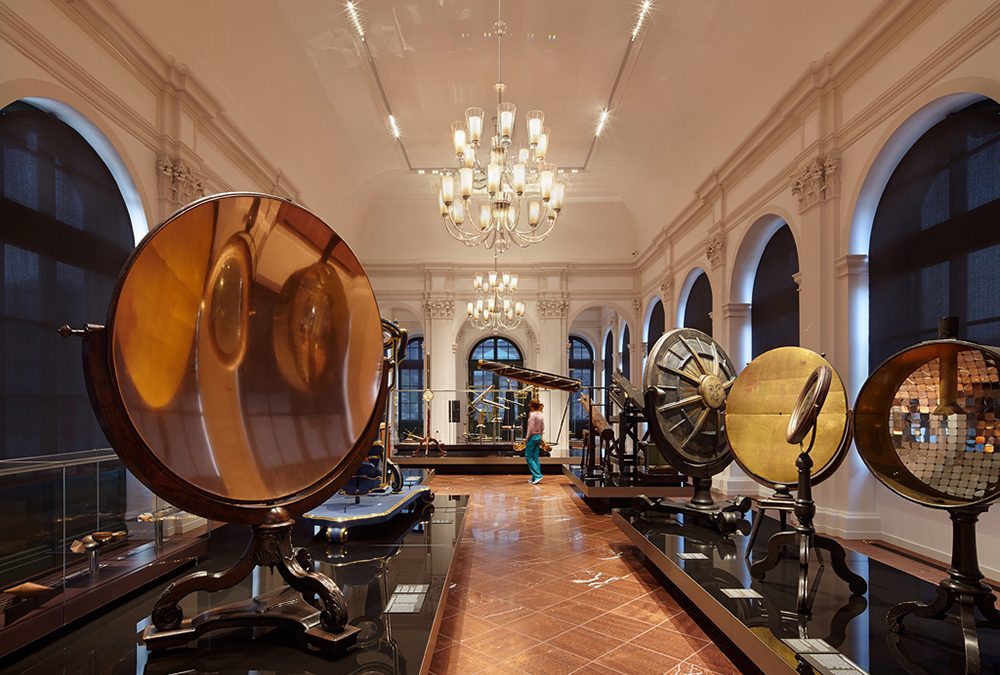
Ever since the opening of the Dresden “Zwinger” in 1728, the “Mathematisch-Physikalischer Salon” has been the key feature in this iconic architectural ensemble. It houses one of the oldest ‘History of Science Collections’, which presents itself after an extensive refurbishment in a brand-new light and with exhibition space almost doubled. Artificial lighting and day lighting are specifically designed to the requirements of the interior finishes which allow sensible objects to be presented in a modern approach while keeping the notion of the original genius locii.

Ever since the opening of the Dresden “Zwinger” in 1728, the “Mathematisch-Physikalischer Salon” has been the key feature in this iconic architectural ensemble. It houses one of the oldest ‘History of Science Collections’, which presents itself after an extensive refurbishment in a brand-new light and with exhibition space almost doubled. Artificial lighting and day lighting are specifically designed to the requirements of the interior finishes which allow sensible objects to be presented in a modern approach while keeping the notion of the original genius locii.

PALAEON

PALAEON

PALAEON

Schoeningen, Germany
Artificial Lighting

Architect: Holzer Kobler Architekturen
Completion year: 2013
Images: palaeon GmbH, id3d Berlin, Lichtvision

The Palaeon in Schöningen was built in honor of the discovery of the oldest hunting weapons on human record. The predominant color of the exhibition interiors is white contrasting the strong colour accents in the foyer. The concept for the building is a nod to layered earth and implemented as a graphic element.
Spatial axes are established by using homogenous light which continues through the space and into the building’s exterior. The graphic nature of the light line is complemented by functional downlights and directional luminaires which clarify interplays of textures and colors.
The Palaeon in Schöningen was built in honor of the discovery of the oldest hunting weapons on human record. The predominant color of the exhibition interiors is white contrasting the strong colour accents in the foyer. The concept for the building is a nod to layered earth and implemented as a graphic element.
Spatial axes are established by using homogenous light which continues through the space and into the building’s exterior. The graphic nature of the light line is complemented by functional downlights and directional luminaires which clarify interplays of textures and colors.

NATIONAL STADIUM WARSAW

NATIONAL STADIUM WARSAW

NATIONAL STADIUM WARSAW

Warsaw, Poland
Artificial Lighting

Architect: gmp Architekten
Completion year: 2012
Images: Florian Licht, Traxon Technologies, Lichtvision

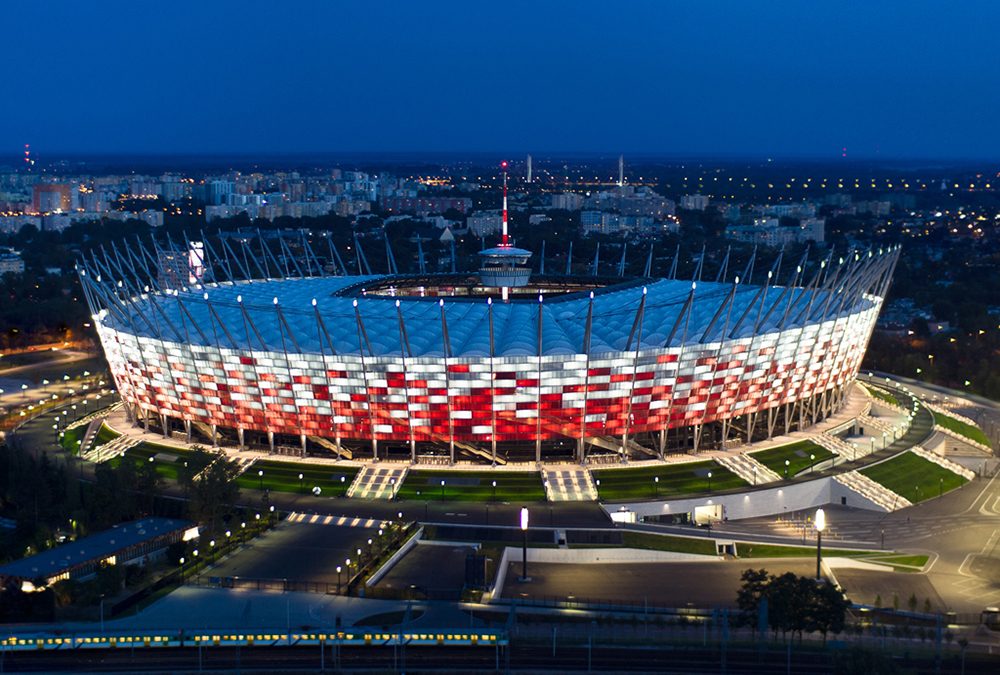
The architect’s main brief was to transform the new landmark building at the centre of Warsaw at night time emphasizing the red and white painted perforated metal screens representing the national colors of Poland. Each panel received a uniform glow of light and was controlled individually enabling the creation of dynamic light scenes onto the facade.

Der Deutsche Lichtdesign-Preis 2013: Finalist
IES Award of Merit 2013
WAN Award 2014, shortlisted
illumni infinity award ‘Silver’
LDA Award 2013

The architect’s main brief was to transform the new landmark building at the centre of Warsaw at night time emphasizing the red and white painted perforated metal screens representing the national colors of Poland. Each panel received a uniform glow of light and was controlled individually enabling the creation of dynamic light scenes onto the facade.

Der Deutsche Lichtdesign-Preis 2013: Finalist
IES Award of Merit 2013
WAN Award 2014, shortlisted
illumni infinity award ‘Silver’
LDA Award 2013

GUTSHOF BRITZ

GUTSHOF BRITZ

GUTSHOF BRITZ

Berlin, Germany
Artificial Lighting

Architect: Abelmann Vielain Pock Architekten BDA
Completion year: 2011
Images: Lichtvision

Throughout the modernization of the Britz manor, a new attractive cultural centre was created in the heart of the Berlin district of Neukölln. The new lighting design concept is characterised by a combined use of two different types of facade illumination: flat, crossable ground recessed lights slightly brighten up the building envelope, while accent lighting of single, well-chosen elements by miniaturized LED lights provides an interesting and attractive appearance during nighttime.

Throughout the modernization of the Britz manor, a new attractive cultural centre was created in the heart of the Berlin district of Neukölln. The new lighting design concept is characterised by a combined use of two different types of facade illumination: flat, crossable ground recessed lights slightly brighten up the building envelope, while accent lighting of single, well-chosen elements by miniaturized LED lights provides an interesting and attractive appearance during nighttime.