MUSEION

MUSEION

MUSEION

Bolzano, Italy
Daylight, Artificial Light, Lighting Controls and Visual Media

Architect: KSV Krüger Schuberth Vandreike
Completion year: 2008
Images: Ludwig Thalheimer, Othmar Seehauser

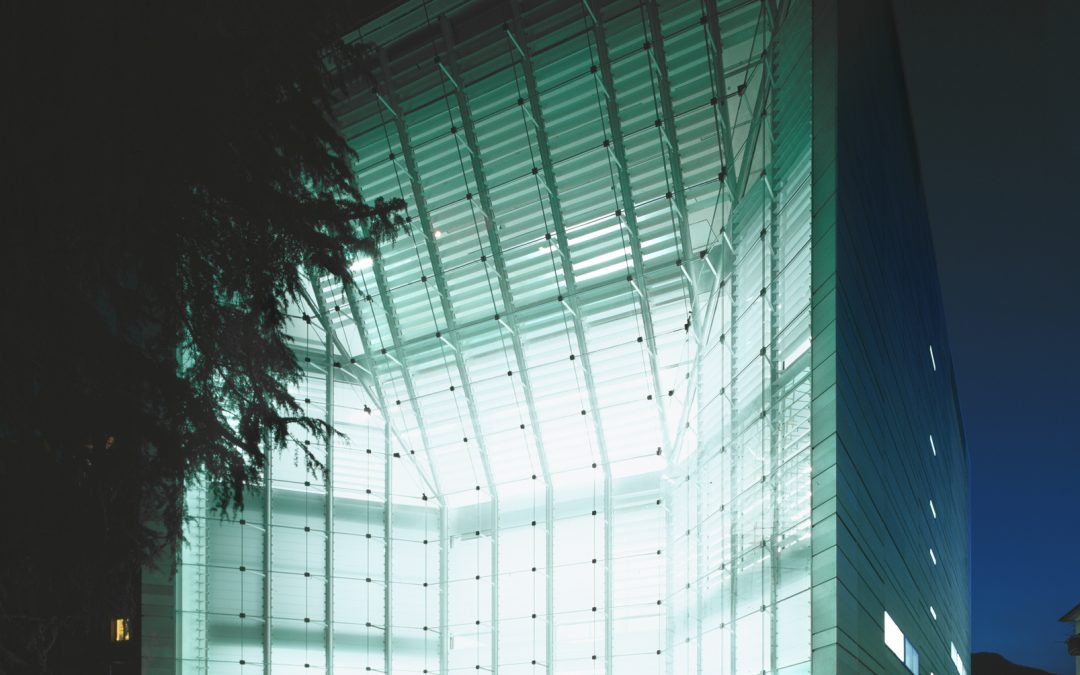
The city of Bolzano’s museum for modern and contemporary art is called “Museion”. A central skylight provides ample natural light and is carried over in lighted ceilings in the lower floors. Transparent glass walls open the modern building to the east and west, where translucent, adjustable glass louvers screen and deflect incoming sunlight. By darkness the louvers can be closed to create a projection surface encompassing more than 500m². These monumental twin screens are ideally suited for the presentation of multimedia artwork and have become a trademark of the Museion.

HOLOCAUST MEMORIAL INFORMATION CENTRE

HOLOCAUST MEMORIAL INFORMATION CENTRE

HOLOCAUST MEMORIAL INFORMATION CENTRE

Berlin, Germany
Artificial Lighting

Architect: Peter Eisenman
Exhibition design: Dagmar von Wilcken
Completion year: 2005
Images: Lepkowski

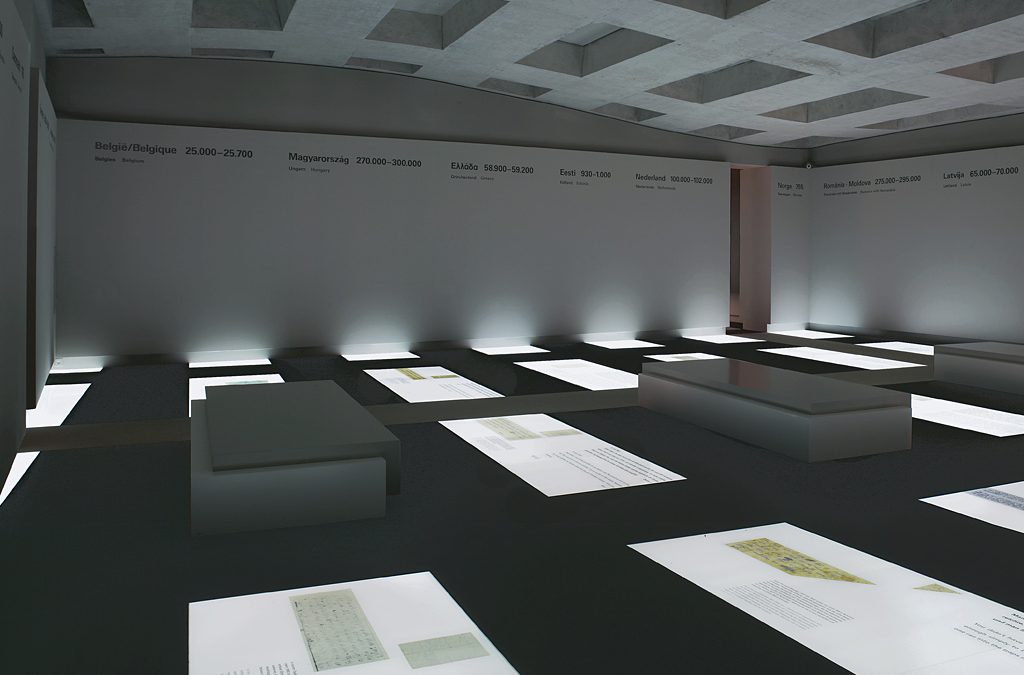
The Holocaust Memorial Information Centre is located beneath the Memorial, with an exposed concrete ceiling structure that mimics the field of concrete stelae above. Balancing the physical experience of the Memorial, the Information Centre introduces an intellectual element by describing the context and impact of the Holocaust.
It is designed as a guided tour through exhibition rooms, wherein the visitor experiences a close link between information and space, a symbiosis of installation and architecture with light serving as a mediator between content and abstract form. The complexity of light atmospheres draws attention while respecting the powerful and sombre contents of the exhibition.
The Holocaust Memorial Information Centre is located beneath the Memorial, with an exposed concrete ceiling structure that mimics the field of concrete stelae above. Balancing the physical experience of the Memorial, the Information Centre introduces an intellectual element by describing the context and impact of the Holocaust.
It is designed as a guided tour through exhibition rooms, wherein the visitor experiences a close link between information and space, a symbiosis of installation and architecture with light serving as a mediator between content and abstract form. The complexity of light atmospheres draws attention while respecting the powerful and sombre contents of the exhibition.

EGYPTIAN COLLECTION IN THE ‘ALTES MUSEUM’

EGYPTIAN COLLECTION IN THE ‘ALTES MUSEUM’

EGYPTIAN COLLECTION IN THE ‘ALTES MUSEUM’

Berlin, Germany

Daylight & Artificial Lighting

Architect: Hilmer Sattler Albrecht Architekten
Completion year: 2005
Images: Staatliche Museen Berlin

The overall lighting design concept is characterized by a clear segmentation of the stretch ceiling construction of this interim installation and pivoting track-mounted spotlights come to use for the general lighting as well as for the lighting of the single exhibits.

FLICK COLLECTION HAMBURGER BAHNHOF

FLICK COLLECTION HAMBURGER BAHNHOF

FLICK COLLECTION HAMBURGER BAHNHOF

Berlin, Germany
Artificial Lighting & Lighting Controls

Architect: Kühn Malvezzi Architects
Completion year: 2004
Images: Ulrich Schwarz

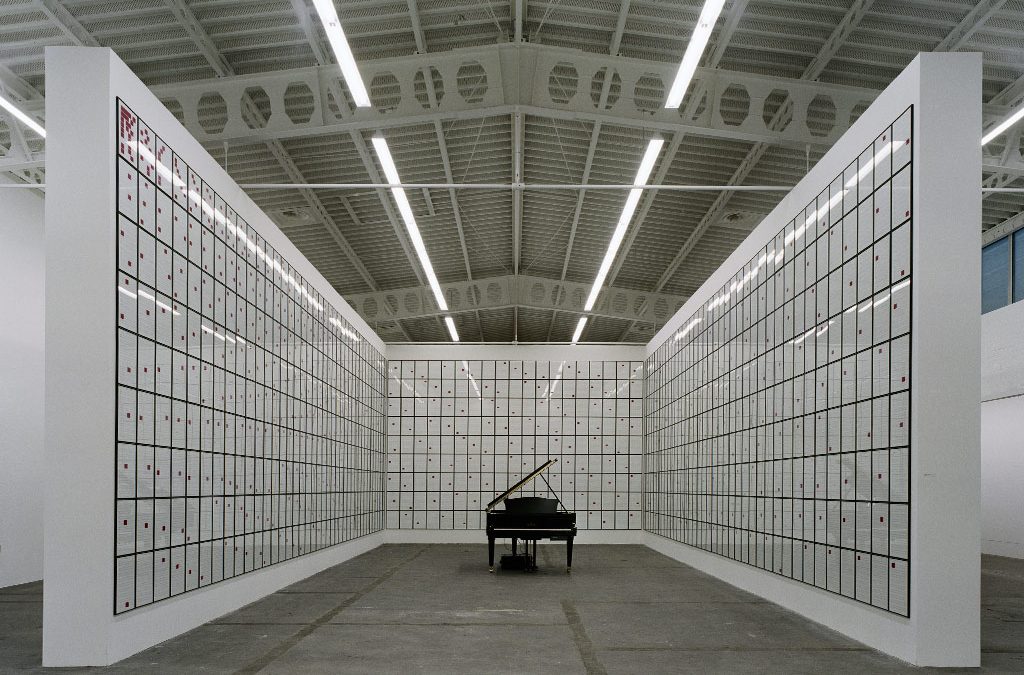
In the newly renovated extension of the Hamburger Bahnhof, the Rieckhallen, the collection of contemporary art by Friedrich-Christian Flick is shown on approx. 6,000 m² of exhibition space. The biannual change of exhibits, consisting of paintings, sculptures and media installations, requires a lighting system that can react flexibly to changing exhibition situations. The design is based on the principle of design invisibility – implemented with only one type of luminaire and interchangeable reflectors as well as a DALI lighting control system.

SCHWABENGALERIE

SCHWABENGALERIE

SCHWABENGALERIE

Stuttgart, Germany

Artificial Lighting

Architect: Léon Wohlhage Wernik Architekten
Completion year: 2003
Images: Christian Richters

The Schwabengalerie has a plot size of over 25,000 m2. The building complex consists of additive cubatures with different functions. Central spot is the citizens’ forum with its gallery-like circulation area. Of importance for the area is the connection between different functional areas, the conveying of security and convenience, especially in the evening hours, as well as the aspect of the effect on possible customers from a distance.

Licht Architektur Preis 2005, Recognition

The Schwabengalerie has a plot size of over 25,000 m2. The building complex consists of additive cubatures with different functions. Central spot is the citizens’ forum with its gallery-like circulation area. Of importance for the area is the connection between different functional areas, the conveying of security and convenience, especially in the evening hours, as well as the aspect of the effect on possible customers from a distance.

Licht Architektur Preis 2005, Recognition